
The FASEP® System: The Complete Solution for Fiber Length Analysis
FASEP® is a system specifically developed for fiber length analysis, enabling the precise determination of fiber length distributions. The solution combines advanced image acquisition technology with intelligent analysis software, allowing the automated measurement of both individual fibers and fiber clusters.
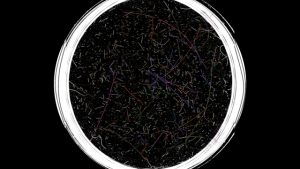
During the process, extracted fibers are optically captured, segmented, and measured automatically. Specialized algorithms enable the automatic separation and measurement of fiber clusters, including overlapping and intertwined fibers. The result is reliable characteristic values and meaningful fiber length distributions for research, development, and quality assurance.
From image acquisition to final reporting, FASEP® provides a complete, integrated solution for fast, accurate, and reproducible fiber length analysis.
Analyze Faster. Understand Better.
The FASEP® System for Development and Quality Assurance
Discover the Power of the FASEP® System
Whether for development, research, or quality assurance, FASEP® provides a powerful, end-to-end solution for precise and reproducible fiber length analysis. Request a quotation, schedule a live demonstration, or arrange a consultation today.
From Sample to Reliable Results
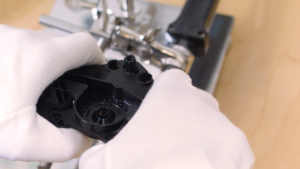
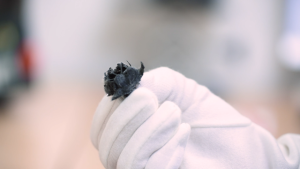
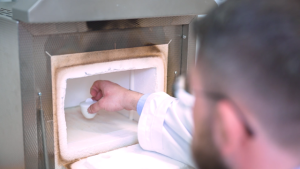
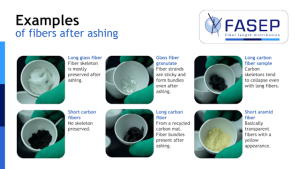
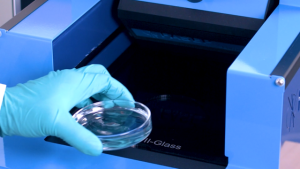
Der typische Analyseablauf beginnt mit der Probenvorbereitung. Bei fThe typical analysis workflow begins with sample preparation. For fiber-reinforced plastics, for example, pellets or samples taken from components are ashed to isolate the glass fibers.
The fibers are then prepared using a specially developed dilution process. This adjusts the fiber concentration so that the sample can be evenly distributed in a Petri dish while ensuring that overlapping fibers remain reliably analyzable. The fiber length distribution itself is not affected by this process.
Following image acquisition, the fibers are automatically detected, measured, and statistically evaluated. The result is a detailed fiber length distribution and standards-compliant characteristic values that can be used directly to support development and quality assurance decisions.
One Integrated System
The FASEP® system was developed as a complete solution. Hardware and software are perfectly matched, enabling an efficient and highly reproducible analysis workflow.
The fiber scanner features a specially designed illumination system that makes even transparent glass fibers clearly visible with high contrast. High-resolution image acquisition generates grayscale images that can be reliably segmented by the software.
For applications requiring microscopic image acquisition, automated microscope solutions with motorized sample stages are available. Image acquisition and analysis are fully integrated into the analytical workflow.
The measurement of individual fibers and fiber bundles is performed using proprietary algorithms specifically optimized for the unique challenges of fiber analysis.
Results and Reporting
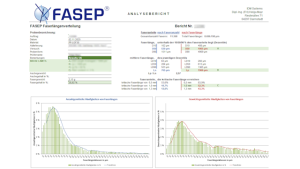
Analysis is performed automatically and documented in clear, comprehensive reports.
Typical parameters include:
– Average fiber length (Ln)
– Weighted average fiber length (Lp)
– D50 values
– Additional statistical parameters describing the fiber length distribution
Reports include:
– Histograms of the fiber length distribution
– Tables of key parameters
– Graphical visualizations
– Graphical visualizations
– German and English language support
The system is suitable for the analysis of short, long, and ultra-long fibers (0.025 mm to 25 mm and beyond).
Typical Applications
FASEP® is used worldwide for the analysis of fibers and fiber-reinforced materials. Typical applications include:
- Fiber-reinforced plastic pellets
- Injection-molded parts and plastic components
- Raw fibers
- Composite materials
- Customer-supplied fiber images and microscopic images
One of the most common applications is the analysis of fiber-reinforced automotive components. In these cases, the fiber length distribution is examined in highly stressed areas to verify the desired reinforcing effect.
Even during the development of new injection molds, components from different cavities can be analyzed. This enables potential weak points to be identified at an early stage, shortens development cycles, and helps prevent future quality issues.
Advantages Over Conventional Methods
FASEP® was developed to overcome the limitations of traditional fiber length analysis methods.
Greater Statistical Significance
While manual methods typically evaluate only a few hundred fibers, FASEP® enables the analysis of several thousand fibers per measurement. This results in significantly more robust and statistically reliable data.
Higher Accuracy
The accuracy of fiber analysis is determined not only by image resolution but, above all, by the ability to correctly interpret complex fiber clusters. The FASEP® algorithm was specifically developed for this purpose, enabling reliable detection and measurement of fibers as short as approximately 25 µm, even from 2400 dpi scan images. This makes highly accurate measurements possible using large-area scan images that can be captured efficiently.
Proven Sample Preparation
The sample preparation method developed for FASEP® has been refined over many years and successfully applied thousands of times. Training is provided by experienced users who are familiar with all practical aspects, challenges, and potential sources of error.
User-Friendly Operation
Image acquisition with the fiber scanner has been designed for maximum ease of use. The automated microscope solution also provides convenient and reproducible data acquisition with minimal operator effort.